Trascrizione
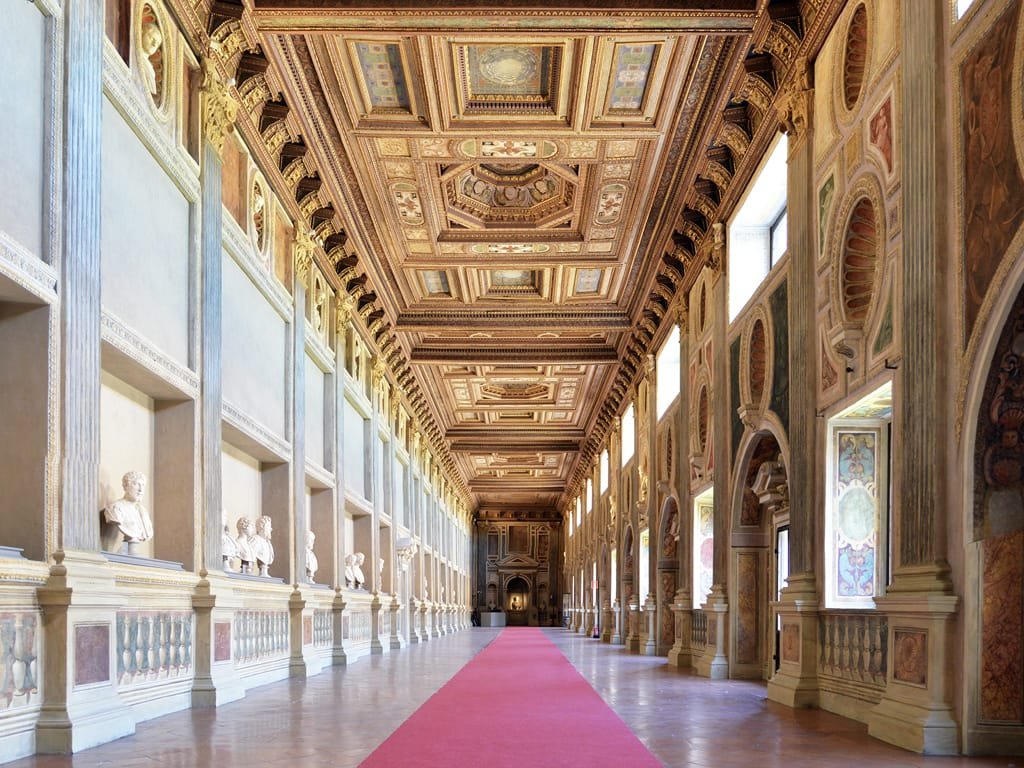
Galleria della Mostra is the heart and essential hub of the connection system implemented by Guglielmo Gonzaga in the 1570s. It is located on the west side of the so-called Cortile della Mostra, a courtyard known as Corte della Cavallerizza from the 1700s and where military celebrations and parades were held. The gallery was configured a first time at the conclusion of work to double the Loggia dei Marmi and right from the start was intended to exhibit artworks from the Gonzaga collection.
As early as 1592, however, the gallery was modified by order of Guglielmo’s heir, Duke Vincenzo I. It was raised and a wooden coffered ceiling and windows were added to the eastern wall while the original arches on that same wall were filled in and decorated with stucco portals leading to the balconies.
From the Gonzaga archives we know that Vincenzo I placed at least thirteen ancient sculptures in the gallery, either discerning purchases or part of the existing family collection, and forty-seven paintings including the Triumphs of Caesar by Andrea Mantegna – today in Hampton Court – and Caravaggio’s Death of the Virgin, now in the Louvre. The collection of gems and jewels was kept in the so-called “zoiolèra”, an octagonal room accessed through a portal that was later walled up, found in the centre of the gallery.
From 1612, Duke Ferdinando once again turned his attention to this space, moving the most valuable paintings to the Logion Serrato (Galleria degli Specchi). By about the mid-seventeenth century, the Gonzaga’s lavish art collection was scattered and Charles II Nevers definitively transformed the room by converting it into a “book gallery”, where volumes were kept in recessed niches that are now used to hold the busts. For the most part the latter come from the collection of antiquities that Vespasiano Gonzaga – from a cadet branch of the family – gathered in Sabbioneta during the latter half of the sixteenth century.