Trascrizione
The Grande di Castello apartments, built in the 1570s at the behest of Duke Guglielmo Gonzaga, derive from a complex architectural concept. Thanks to the adaptation of existing buildings and new constructions, Giovanni Battista Bertani (prefect of the ducal studio) was able to connect and render more functional the detached sections of the court.
The apartments include state rooms, decorated with subjects extolling the glories of the Gonzaga family, and private studies. The project included not only Mantuan artists – above all Lorenzo Costa the Younger – working in the 1480s and 1490s, but also “foreigners” like Padua sculptor Francesco Segala and Naples architect and antiquarian Pirro Ligorio.
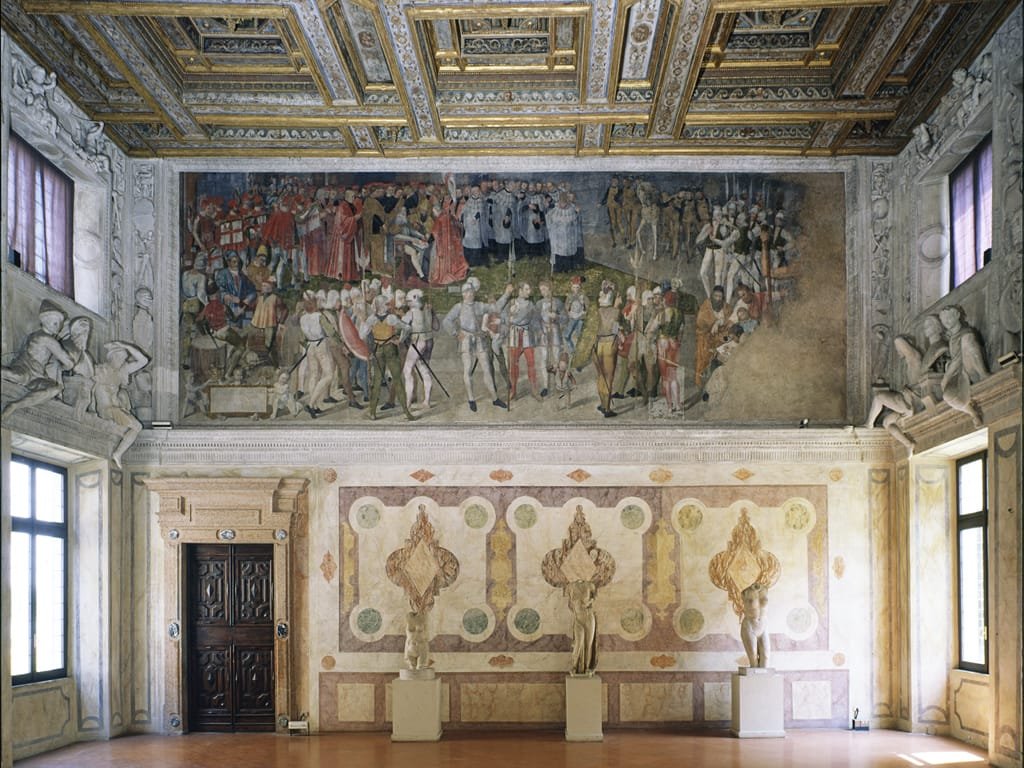
In the Camera dei Capitani, named for the stucco portraits of the first four captains of the people, there is a surviving mural depicting the Oath of Luigi Gonzaga. The windows either side of the fireplace overlook the Cortile dei Cani courtyard, named after wall plaque dedicated to the dog Oriana, which belonged to Margherita Gonzaga, sister of Duke Vincenzo I. Originally a hanging garden included in the Troia apartments, it was converted into an enclosed courtyard at the time of Duke Guglielmo.
The next room, the Camera dei Marchesi, was home to Jacopo Tintoretto’s Fasti, produced in 1578–9, which celebrated the key moments and decisive military victories of Gonzaga rule. These paintings are now on display in Munich’s Alte Pinakothek and are replaced here by photographs.