Trascrizione
These state rooms were occupied by Isabella d’Este after the death of her husband. She immediately restructured in line with her own tastes. The sculptures exhibited here are not directly connected to the marquise’s collections, but refer to her desire to imitate and assimilate classical antiquities that characterized her collecting, deeply rooted in the vibrant cultural climate of the early sixteenth century.
Almost all the pieces on display come from the Palazzo degli Studi statue museum, owned by the Municipality of Mantua, where most of the sculptures of Vespasiano Gonzaga, Duke of Sabbioneta, were taken in the eighteenth century.
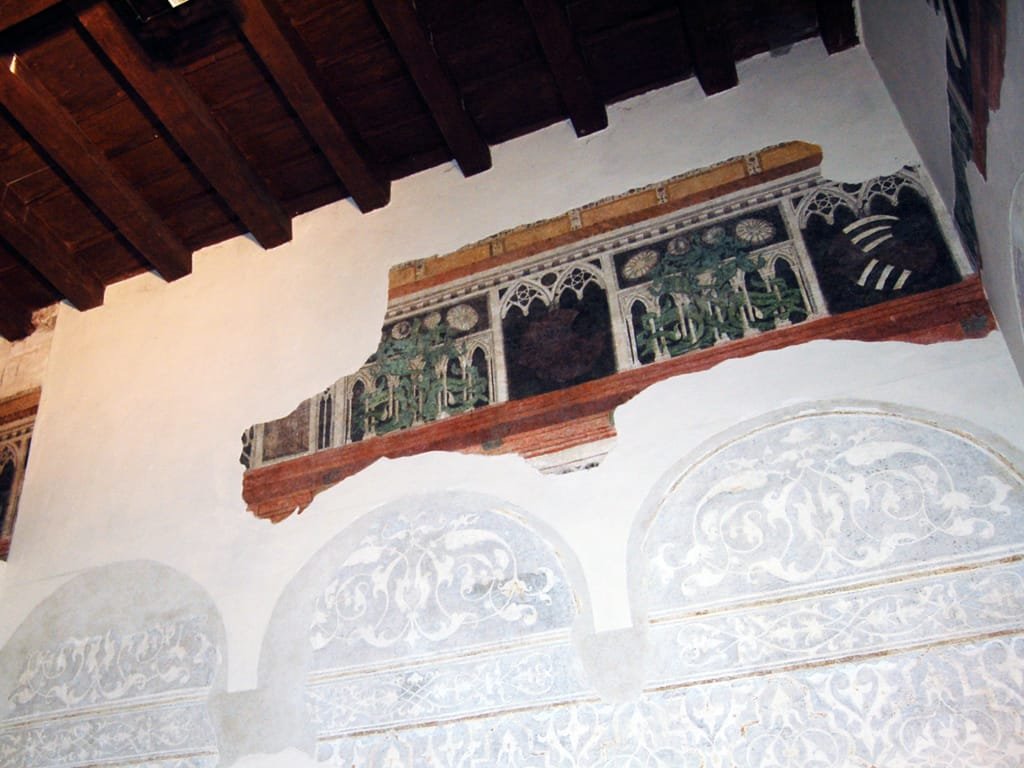
In the upper part of the first two rooms of the apartments we will see albeit incomplete “antique-style” monochrome friezes, with the feats of the Gonzagas and of Isabella herself; the third room bears traces of an early fifteenth-century frieze with heraldic motifs.
The most important room in the apartments is the so-called Sala Grande or Sala Imperiale. The stucco decoration was made by Giulio Romano’s workshop in the 1830s: there are medallions with elegant figures on the walls, inspired by Roman cameos and coins, while the fireplace is decorated with an ancient relief integrated in sixteenth-century style. At the centre of the room we see the so-called Apollo of Mantua, a Roman sculpture from the first century BC, an emblematic piece from the city’s eighteenth-century Museo Statuario.