Trascrizione
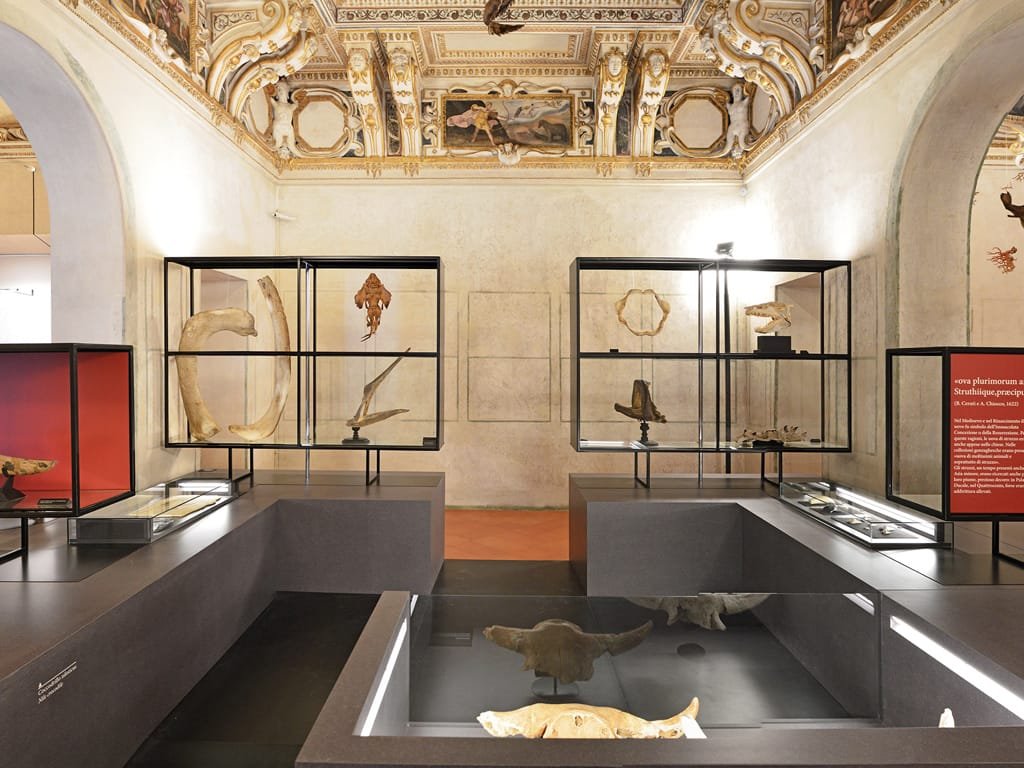
The gallery comprises a sequence of four rooms built from 1594 to 1595, named Galleria delle Metamorfosi for the painted subjects that adorn the vaults, inspired by Ovid’s Metamorphoses. Conceived as the perfect showcase for the court’s nature and eclectic collection, the decoration of these rooms transposes the concept of elevation to the mythical level of the material as represented by the objects present.
One of the most curious of these objects was the mummified body of Rinaldo Bonacolsi, known as “Passerino”, killed in the 1328 popular uprising that ended with the Gonzagas taking power. For this reason the gallery was also known as “del Passerino” from the mid-1600s.
The nature collection was assembled thanks to Vincenzo I, later reorganized by Ferdinando. It comprised four classes: products of the earth (minerals and fossils); of the sea (corals, shells and other marine wonders); objects from the Americas (including rare plants); finally, curiosities of the animal world. The objects on display today recall those originally present in these rooms, as described by the inventories and descriptions of the time.
The gallery overlooks the vast Giardino dei Semplici, from the word used for medicinal plants at the time. The garden had already been planted by the end of the fifteenth century but radically modified at the turn of the 1600s by the monk Zenobio Bocchi at the behest of Vincenzo I Gonzaga. The garden’s four quadrants divided into flower beds recovers the original design, while the medicinal and aromatic herbs now grown are those recorded in a 1625 inventory.