Trascrizione
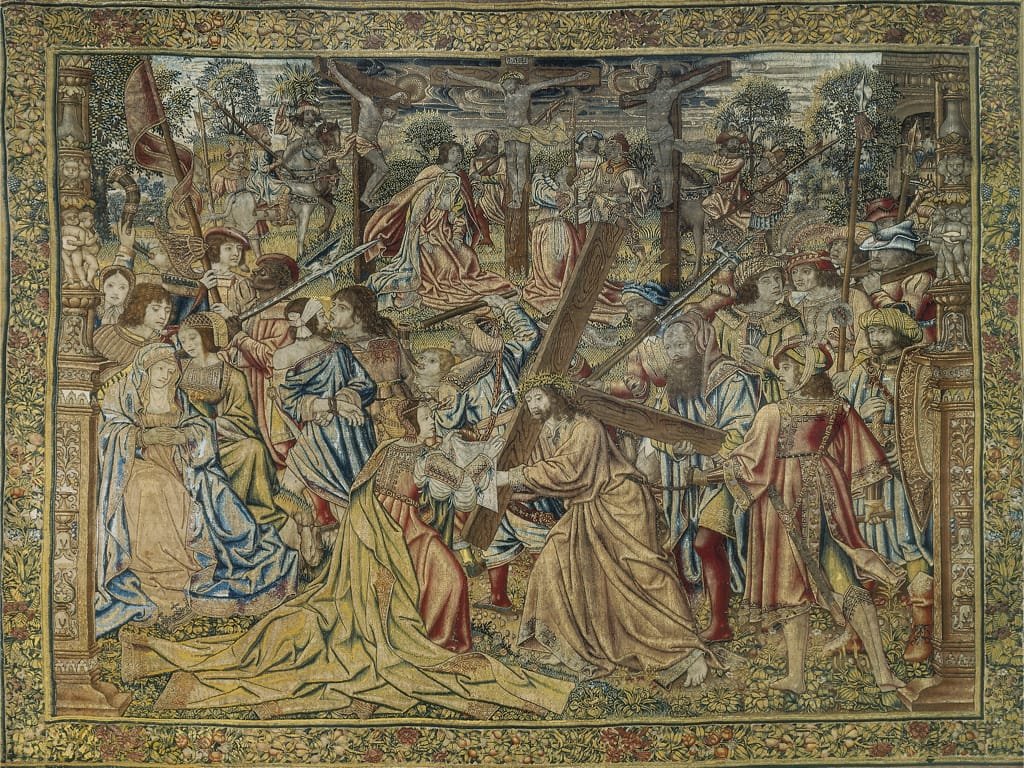
The seven tapestries in this room were purchased in 1531 in Cologne by Prince Bishop Bernardo Cles. The cycle depicts the stories of the Passion of Christ and was made in Brussels by the workshop of Pieter van Aelst, the most important tapestry weaver of the time. In 1515, Pope Leo X Medici had turned to him to weave the tapestries for the Sistine Chapel based on designs by Raphael. Unfortunately the cartoonist of the tapestry displayed here is not known.
Initially intended for the decoration of the Tower Room in the Castello del Buonconsiglio, the tapestries were used, during the Council of Trento, to embellish - but also to insulate and soundproof - the wooden hall specially set up in the choir of the cathedral, where the ceremonial sessions were held. I invite you to walk around the room, as many prelates probably did at that time, to appreciate up close some of the rich details that distinguish these works.
The cycle belongs to the style known as Pre-Renaissance, characterised by the combination of elements from the new decorative repertoire of the Italian Renaissance - such as musical cherubs, masks, and garlands - and the Flemish Gothic tradition. Typical of mediaeval taste is the simultaneous narration of the episodes, three on each tapestry, and the dense arrangement of the characters. Their clothing, headgear, and swords, depicted with great care by highly skilled weavers, constitute a veritable catalogue of fashion and weapons from the late 15th to the 16th century. On the third floor, you can touch the fabrics used to make the precious garments depicted in these tapestries, the very same used for making the clergy’s liturgical vestments. Finally, you can notice the minute realism of the floral frames and the borders of the garments in some of the tapestries, where the weavers' signatures also appear.
The smallest tapestry, depicting Saint John on Patmos, produced in the same workshop between 1530 and 1540, is a stand-alone piece that Cles placed in the library of the episcopal residence.