Trascrizione
Welcome to the Giovanni Poleni Museum!
We have 499 instruments currently on display, all of them rich in stories and history. We will discover some of them during this visit.
We start along the corridor until we reach the map on our right.
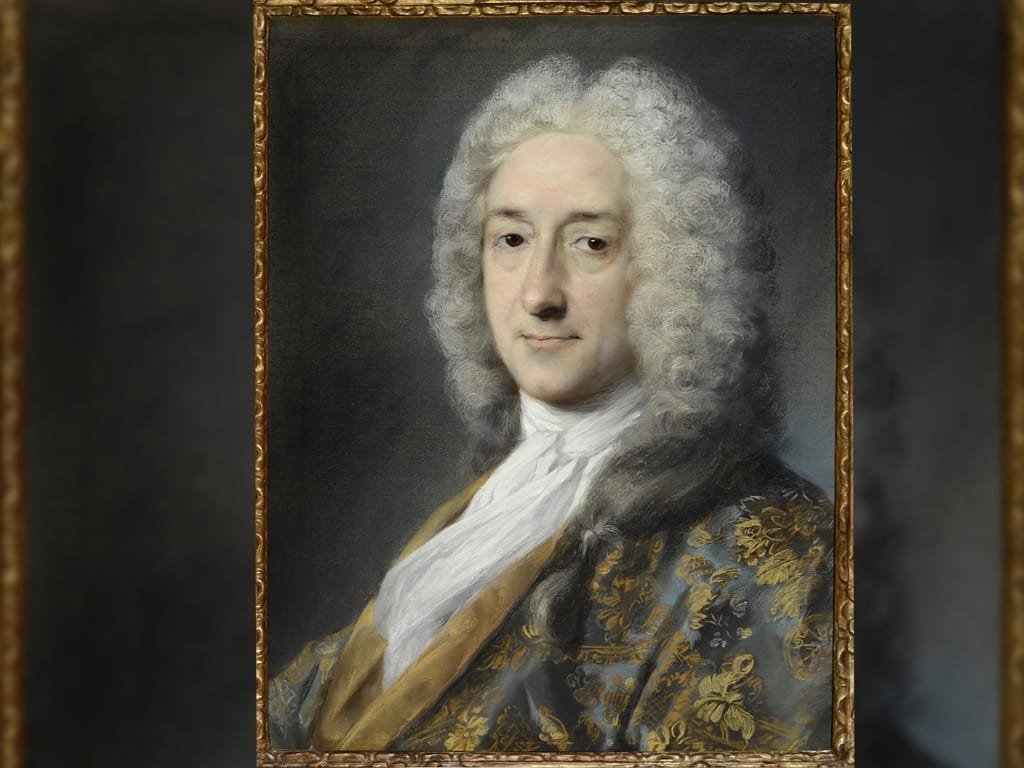
Let’s stop here, in order to learn more about Giovanni Poleni, the Venetian scholar after whom the Museum is named. The map shows the places where Poleni had correspondents... from St Petersburg to London, from Paris to Lisbon... Poleni was in contact with scholars from all over Europe, such as Leibniz, Newton, Scipione Maffei and many others. He enjoyed the esteem of scientists such as Euler and the Bernoullis. He was indeed one of the great figures of the 18th century, expert not only in science, but also in art, music, architecture, philology and antiquity. He was a member of the main European academies.
Besides his European dimension, Poleni also had strong ties to the local area, as shown by the model of the pile driver, the instrument you will see as you walk a few steps further. The pile driver was used to drive piles into river beds; it was also widely used in Venice. In this model, the force of the water lifted the mass, which was then allowed to fall back onto the piles. This particular pile driver, very effective for its time, was designed by Bartolomeo Ferracina for the reconstruction of the Bassano bridge. We see a print of this bridge on the wall. Designed by Palladio, the bridge was destroyed by a river flood in the mid-18th century. A few words about Ferracina: he was a mechanic and a watchmaker; he was responsible for the restoration of the clock in San Marco Square in Venice, and of Palazzo della Ragione in Padua. Ferracina himself built this model of his pile driver for Padua Cabinet of Physics, at Poleni's request. Poleni’s interest should not surprise us. Like many scholars of the University of Padua, he was involved in the preservation of the lands of the Venetian Republic: he studied and modified the course of rivers (also for the preservation of the Venetian lagoon!), he examined the problems of wooded areas and analysed the canals of Padua, as you can see here in the reproduction of his sketch of Padua's waterways, at Porte Contarine.
It should be noted that the pile driver on display is of fundamental importance in the history of architecture, due to its connection to Andrea Palladio. Many connections between physics and other disciplines will emerge during our visit.
As we move past the portrait of Poleni, we enter the first room on your right.