Trascrizione
In the years around 275 BC a woman was buried in Atèste, on the southern slope of the Euganean Hills. She was not laid to rest in a pit but in a large sarcophagus constructed from Scaglia Rossa stone slabs. This limestone is as red as its Italian name suggests and was formed many millions of years ago, when these areas were completely covered by seawater.
Her tomb has four walls and a sloping roof and is very reminiscent of Etruscan tombs, with its house-like design. It is the first such tomb in this area.
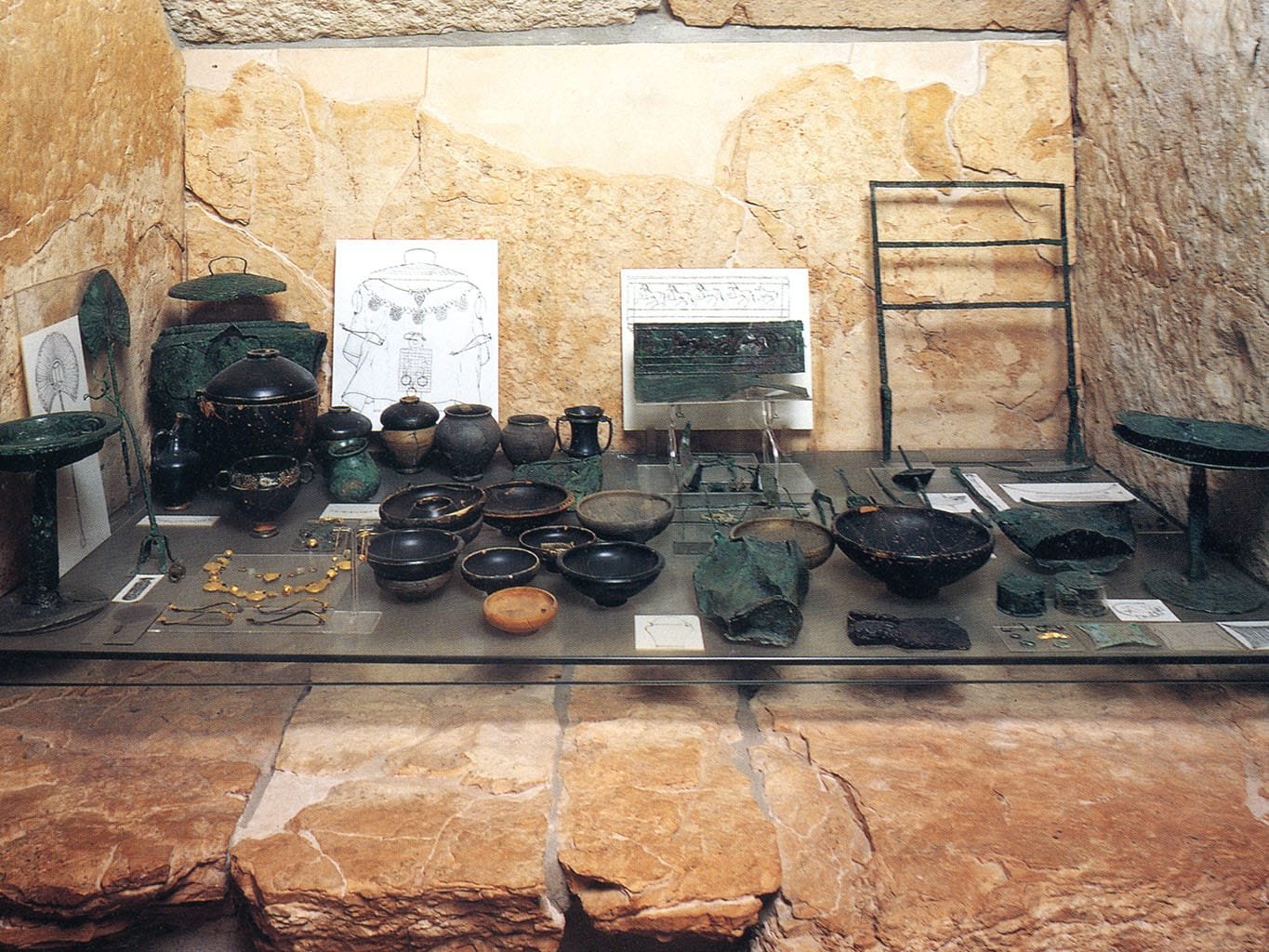
Just like a house, it contains domestic objects and tools although here they are for the afterlife. Grey pottery tableware made by Venetian artisans but also black overpainted bowls imported from Etruria and Adria.
Spits and tongs, a fan and a candlestick, all in bronze, but also rings, bracelets, sceptres, a miniature seat, and a vertical loom with many spinning and weaving tools.
In the north corner of the sarcophagus house, an urn contains the ashes of the deceased, placed inside a precious bronze ritual vase called a situla. Centuries later, an inscription in ancient Venetic language reveals the name of the deceased: “Ègo Nèrkai Tròstiaiai”.
“I am Nerka Trostiaia”.