Trascrizione
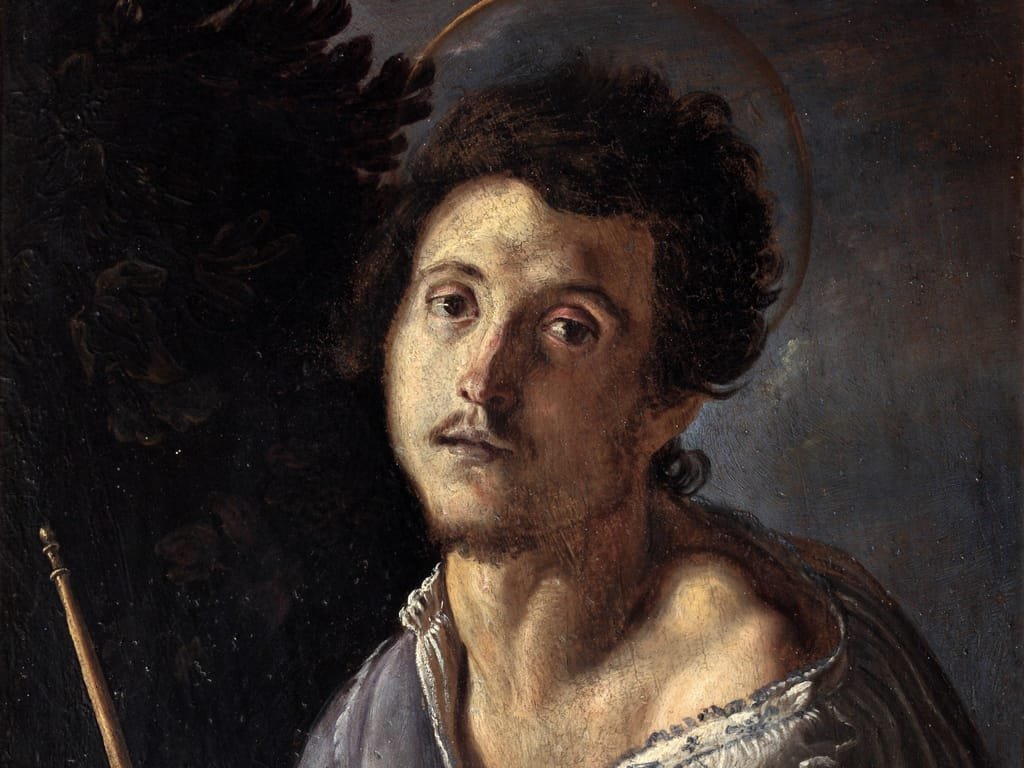
A careful observation of the six works exhibited here reveal a unique feature of Palazzo Ducale: a series of oil paintings on slate. While this support allowed artists to achieve exquisite colour effects, it was rarely used because slate is as heavy as it is delicate. In his Lives of the Most Excellent Painters, Sculptors, and Architects, sixteenth-century biographer Giorgio Vasari attributed to the Venetian Sebastiano del Piombo the much-admired technique of “colorir in pietra” - literally “painting on stone” - because “it seems that in that way the paintings became eternal works, and neither fire nor woodworm could harm them”.
The six paintings date to 1613–14 and are the work of Domenico Fetti. They were intended for the refectory of the Sant’Orsola monastery in Mantua, which was also the location of the same author’s monumental Multiplication of the Loaves and Fishes, which is now found in the Salone degli Arcieri.
From the attributes seen on the saints, we can deduce their identity quite precisely: Saint Louis of Toulouse holds a sceptre and wears a crown; Saint Barbara holds a sword against a tower background; Saint Sebastian pierced by an arrow for eternity; the figure with the palm of martyrdom and a pearl on her forehead could be Saint Catherine of Alexandria or Saint Margaret. Finally, two unidentified holy martyrs, one of which may be the work of the nun Lucrina Fetti, the painter’s sister.