Trascrizione
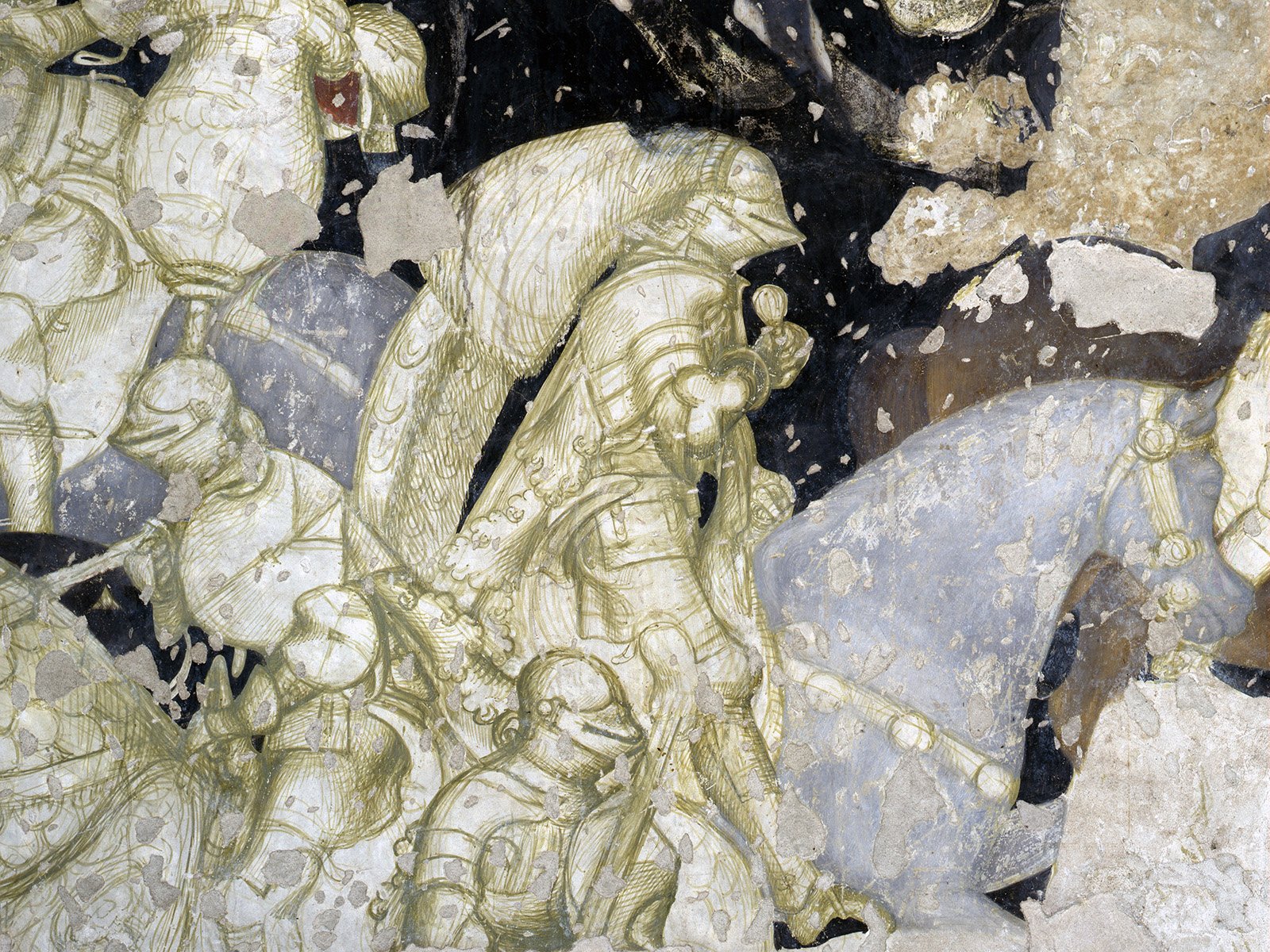
The Late-Gothic paintings you see here did not come to light until about 1964.
Until then, they remained covered by various layers of paint added throughout the centuries. Once removed, the stunning mural cycle attributed to Antonio Pisano, commonly known as Pisanello, came to light. We can thank Giovanni Paccagnini, then superintendent and director of Palazzo Ducale, for the discovery and restoration of the remains of the original decoration.
Today it is difficult to appreciate how truly precious Pisanello’s paintings were. Using your imagination, try to restore them in your mind, choosing bright colours, but adding silver and gold foil to simulate the gleam of knightly armour and weapons.
One of the best-known figures of international Gothic, Pisanello was born in about 1395. During his successful career, he worked in Venice, Pavia, Rome, Ferrara, and Naples, for Pope Martin V and for the most prestigious patrons of the time.
This cycle was commissioned by Gian Francesco Gonzaga, who was awarded the title of marquis by Emperor Sigismund in 1433. Perhaps the paintings were conceived precisely as a celebration of his figure.
The subject of the work comes from Lancelot en Prose, a Breton Cycle poem, and describes the tournament in which Lancelot’s cousin Bohòrt defeated sixty knights at the castle of King Brangoire.
Standing with our backs to the windows, we notice the difference between the right wall, entirely frescoed with the tournament scene, and the left and fireplace side walls, with an elegant, sophisticated red design.
The painting is very detailed and various refined Gothic inscriptions identify the knights. The artist probably found himself in the position of having to conclude the cycle at short notice, but he was determined not to skimp on the work.
At the top of the frieze around the painted wall a heraldic symbol or impresa depicts collars with a swan file. They are the “collari delle Esse”, namely the Lancaster coat of arms granted to Gian Francesco Gonzaga in 1436 but which had already been in use in previous years.
And the patron? He is here too, the rider on the bottom far right, identified by the name inscribed on his horse’s harness, now almost illegible.