Trascrizione
This section of the guide draws to a close both the visit to the Tridentine Diocesan Museum, and the story of the darkest page in the history of the prince-bishopric, that of Simon of Trento. If you haven't already, listen to the previous sections of this audio guide to learn more about this tragic incident and the dramatic events that followed.
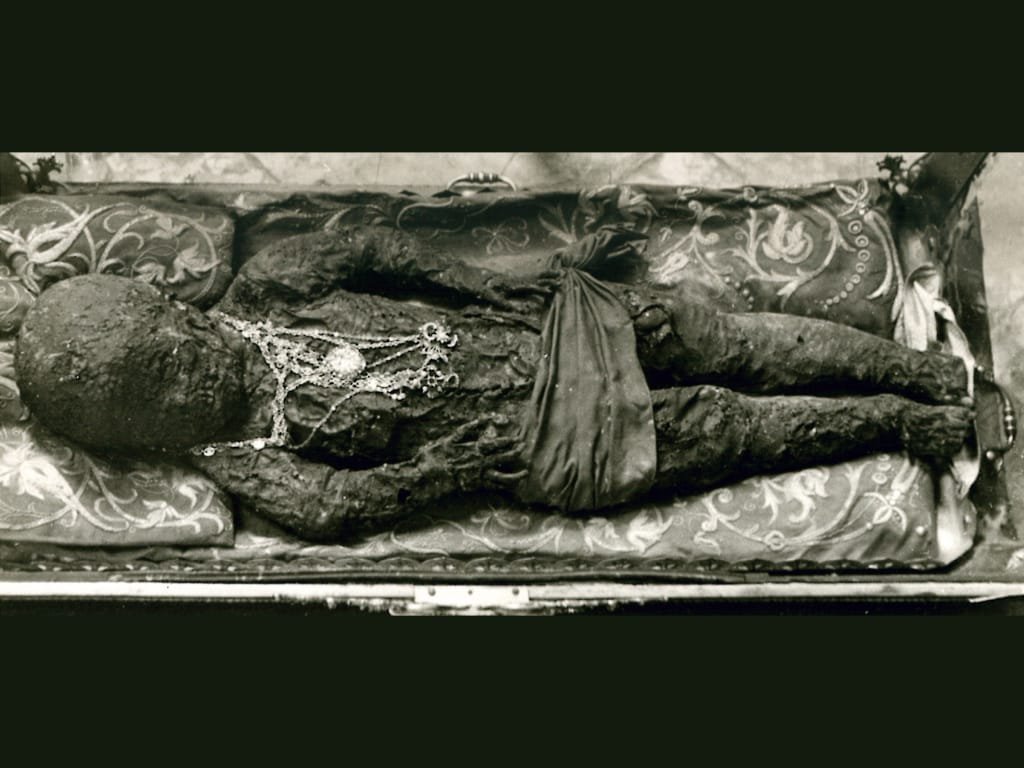
It is said that just four days after the death of the child, in the church of Saint Peter, where his small lifeless body lay, Simon performed his first miracle. The fame of Simon as a healer saint spread quickly, and many pilgrims came from far and wide to ask for grace, leaving in exchange offerings of money, metal and silver tokens or ex-votos, candles, and other wax objects. Probably donated by pilgrims of rank, the three pendants displayed in this showcase adorned the child's corpse, as can also be seen in the image accompanying this audio guide section.
In the last centuries of the Middle Ages, it was not uncommon to encounter saints whom devout people considered as such, even without the ratification of the Church of Rome. Thanks to a propaganda campaign, skilfully orchestrated by Bishop Hinderbach, Simon's cult soon spread to other areas of central-northern Italy and Germany. Towards the end of the 16th century, Pope Sixtus V ratified the "de facto" situation and beatified Simon.
It was only after the Second World War, thanks to the climate of openness to interreligious dialogue promoted by the Second Vatican Council, that an independent study commissioned by the then Bishop of Trento, Alessandro Maria Gottardi, denounced the distortions in the trial of 1475 and restored historical truth. On October 28, 1965, the Church officially abolished the cult of the falsely "beatified" Simon and the then director of the Diocesan Museum, Monsignor Iginio Rogger, finally buried the child's remains, in a place that remains secret to this day.
Although more than 500 years have passed, this sad story still has much to teach us. The fear of the other, or the need to find a culprit to explain the most tragic events, are currently still the pitfalls of the human soul. Only through tolerance and respect, historical memory, and a fairer and more inclusive society can we avert such things.