Trascrizione
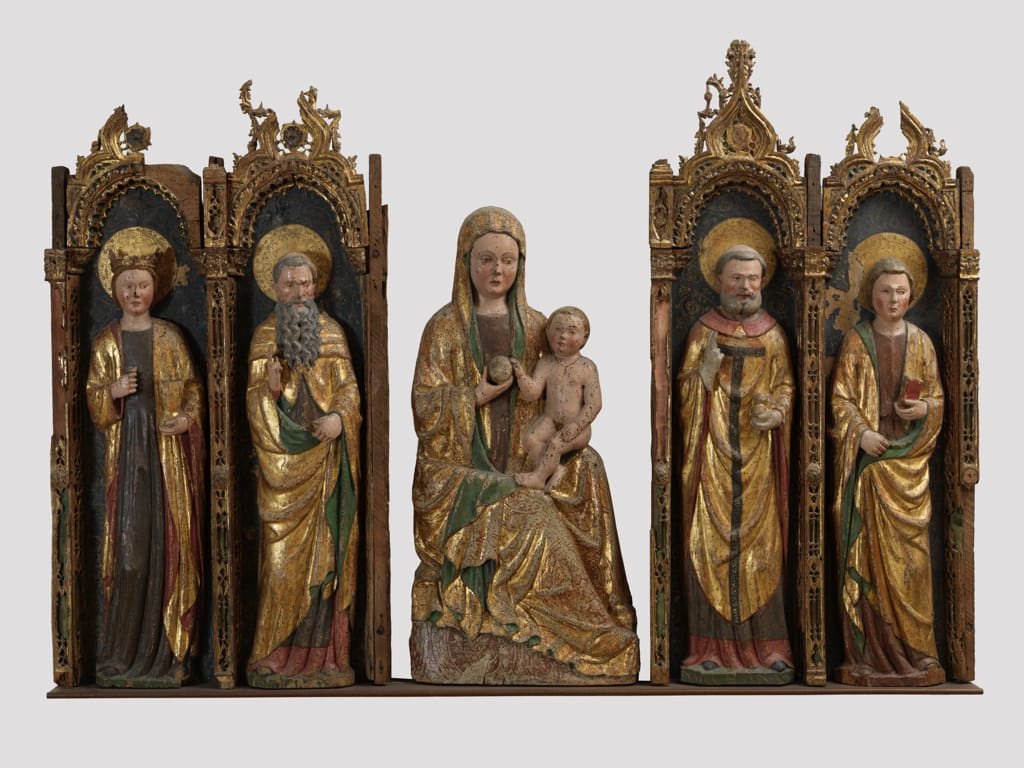
This and the next room house an important collection of wooden sculptures, consisting mainly of altar fragments from the 15th and 16th centuries. In Trento, due to the absence of workshops for altar production, these were imported from either the Po Valley or the German-Tyrolean region, which followed two distinct artistic trajectories.
The Po Valley style, exemplified by the Avio Polyptych displayed in this room, featured “edicole”, that is, compartments, arranged on one or two levels, with saints around the central figure of the Madonna enthroned. Italian-speaking, Trentino worshippers preferred alters of this type.
The second style, favoured by German-speaking communities, is characterised by side panels, which also give it its name: in German, Flügelaltar, "altar with wings." The central section, with statues depicting the Virgin or the patron saints, was closed by two or four movable doors, painted on the outside and decorated in bas-relief on the inside, which were opened for feast days.
Excellent examples of Flügelaltar include the one in this room from Fornace. Originally commissioned for the Church of Saints Peter and Paul in Trento, by a farmer from the Confraternita degli Zappatori. In the centre of the next room, the imposing polyptych, from Tassullo in Val di Non, contain small statues of the Martyrs of Anaunia in the base or predella.
Most of these works were dismantled between the 17th and 18th centuries to make room on the main altar for the tabernacle and the throne as well as to respectively store and display the Eucharist in accordance with the new liturgical norms defined by the Council of Trento and by St. Charles Borromeo.