Trascrizione
With the conclusion of the Council of Trento, a phase known as the Counter-Reformation began in Europe, during which the Catholic Church endeavoured to reaffirm the doctrinal canons established in Trento. Visual arts became a powerful tool to reassert the main doctrinal tenets being challenged by the Protestants and unilaterally resolved by the Council. Which were the authority of the Church in interpreting the Scripture, the papal primacy, and the dogma of transubstantiation, that is, the actual transformation, at the moment of the Eucharistic consecration, of the bread and wine into the body and blood of Christ.
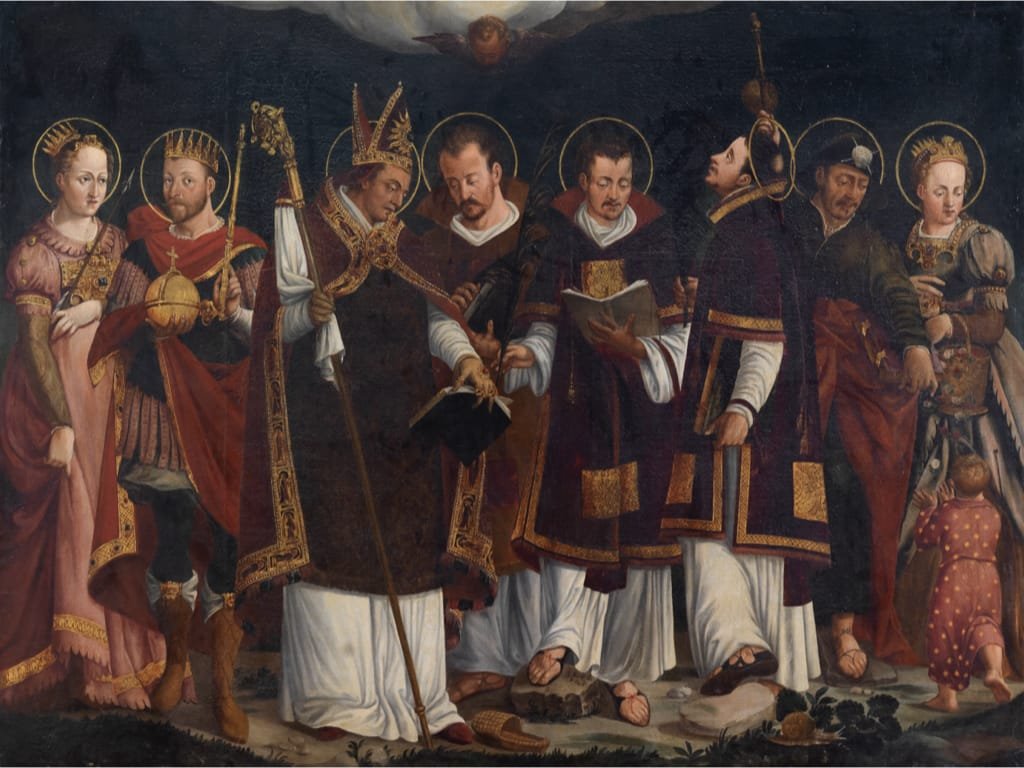
The artist Paolo Naurizio, born in Valsugana but of German origin, was the painter who best interpreted the requests of the post-Council Church in Trento. Trained in the Venetian context, especially through the study of prints, his style is characterised by somewhat sombre images, didactically organised to reaffirm the Church's dogmas.
Take, for example, the Mass of Saint Gregory exhibited in this room. The episode presented here takes up a mediaeval legend but revises its scenic composition to convey key concepts of Tridentine theology. At the top, the vision of Saint Gregory is enclosed in a celestial space, separated from the rest of the scene, where Saints Peter and Paul are also present, reaffirming the papal primacy denied by the Protestants. In the lower register, beneath the faithful and the clergy, the skeletal souls of purgatory also attend the mass. In open opposition to the challenges of the Reformation, this composition aimed to reaffirm how, at the moment of the consecration of the host and its subsequent transformation into the body and blood of Christ, the Universal Church was gathered, comprising the triumphant in Heaven, the militant on Earth, and the suffering in Purgatory.
The coexistence of the three registers, though separate, reaffirmed the sound union between the Divine, the faithful, and the deceased. This union meant that the living - through prayers, indulgences, almsgiving, and, above all, through the Holy Mass - could gain access to the so-called treasure of the merits of Christ and the saints, to alleviate the sufferings of the souls in Purgatory.