Trascrizione
Could Geography exist without exploration, without the desire of discovering and learning about the world? The answer is no. Geography is nourished by the encounter with the uniqueness expressed by the various territories. In the same way, geographers are born with their feet in the mud, in direct contact with their research object, with which they relate physically sooner than intellectually.
Exploration can take two directions: the scientific one, which aims at measuring phenomena as the basis of knowledge, and the humanistic one, attentive to the description and fine interpretation of phenomena by human subjects.
Thus, as we talk about exploration, we not only evoke the epic of the great geographical expeditions, but also the large and small discoveries emerging from the geographical research in each of us. This is the concept expressed by Jorge Luis Borges, in the quote that stands out on the wall on the right: “There is not a single man who is not a discoverer. He begins by discovering the bitter, the salty, the concave, the smooth, the rough, the seven colours of the rainbow and the twenty and more letters of the alphabet; he continues with faces, maps, animals and stars; he concludes with doubt or with faith and with the almost total certainty of his ignorance".
This small but important hall invites you to learn about some explorations of the past researchers from Padua, browse through the explorations of present geography, and imagine what the explorations of the future will be. The hall is dedicated to Giuseppe Morandini, the charismatic director of the Institute of Geography from 1948 to 1969, who more than any other in Padua stood out for his explorative activity in the classical sense. He was the lead scientific director of several expeditions, from the colonial one to Italian East Africa, to that in the territory of Iranian Balochistan, organised by Italconsult in 1958. Between these two, another famous expedition, of which he was the scientific director, is evoked here by the exhibits displayed on the high steps, which take us to the end of the world, in the Chilean Tierra del Fuego. The purpose of the mission was to study the area, as well as to bring to fruition the dream of the missionary and explorer Father Alberto Maria De Agostini to conquer the summit of Mount Sarmiento. This epic challenge, which failed already several times, succeeded in March 1956 after three months of attempts, as the cover of the Domenica del Corriere tells us, thanks to two of the most skilled mountaineers of the time, Clemente Maffei from Trentino and Carlo Mauri from Lecco. That ascent was unique and extraordinary. No one else, in fact, managed to set foot on that peak for many years, until the ascent was accomplished in 2013 by the mountaineers Natalia Martinez from Argentina and Camilo Rada from Chile.
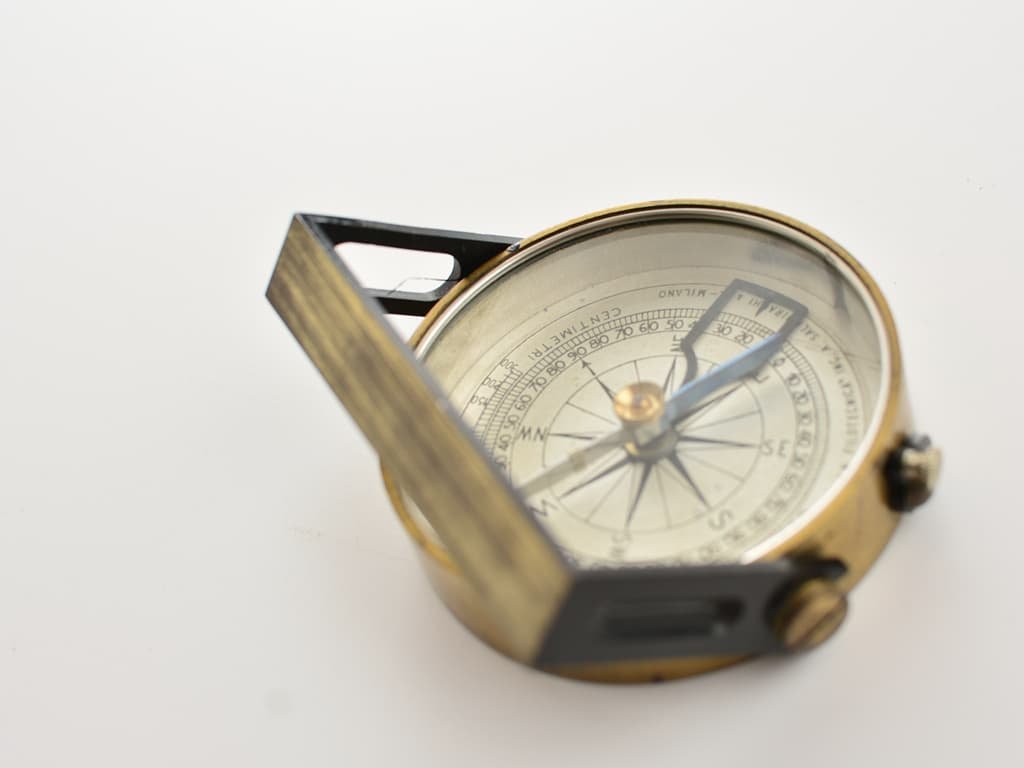
The expedition is narrated by the original equipment transported by ship in large green wooden trunks, like the one you see below, on which the original shipping label of the Paduan carrier Domenichelli can still be seen. The exploration is also recounted by Morandini’s photographs on the screen below, taken with one of the cameras that the geographers of Padua never failed to take with them, of which a small selection can be seen. Other tools and notebooks, preserved in the glass display cases, evoke Giovanni Marinelli’s studies on alpine altimetry, the geomorphological observations on the Dolomites by Bruno Castiglioni, the research on Italian coasts by Marcello Zunica, and many other small but important explorations.
Exploration and fieldwork have always been a characteristic of geography in Padua, as highlighted, on the upper screen, by the images of educational excursions organised for the students since the early twentieth century.
The other side of the room is dedicated to the "explorations of geography", that is, the research objects of the geographers of yesterday, today and perhaps tomorrow.
Here it is possible to explore various geographies, find the answers to new questions, compare methods, and question a monolithic idea of geography, suggesting other possibilities for future explorations.
In the large touchscreen, you can browse the vast heritage of past geographical research through three levels of exploration: the first is that of the biographies of the geographers of the past; the second is that of the scientific publications that you can consult in an interactive Atlas of research by location, author or year of publication; the third will let you explore the collections and allow you to digitally discover items that are not on display in the Museum.
Next to the screen, a mosaic of 20 revolving tiles allows you to discover the research questions that geographers in Padua are currently trying to answer.
The wall behind hosts the old library files, which collect the publications of the past organised by author, theme and location. They form the background for the keywords of future geographical research, as imagined by the community of Italian geographers in a survey launched by the Museum in 2019. Several of these key words, such as "Land-grabbing", "Spatial Justice", "Migrations" or "Globalization", face today, with a critical eye, also the long-term effects of colonial policy, to which a certain kind of geographic exploration provided in the past scientific support and political justification.
Finally, on the back wall of the room, the exploration of the local in the global and of the global in the local is evoked by the overlapping on a planisphere of the Gran Carta of the territory of Padua by Giovanni Antonio Rizzi Zannoni, created in 1780.
While extending the city of Padua to the whole planet the map invites us to reflect on the relationships that the city, the University, and all of us have daily with the planet itself. At the same time, it presents Padua as a city that becomes a world, crossed as it is by trajectories and spaces of activity that lead away from us, recalling the vocation for openness and hospitality already present in its founding myth: the arrival of the Trojan hero Antenore, who immigrated from the distant coasts of Asia Minor. A fate that repeats itself.
Wait a minute before crossing the curtain that divides the Exploration Hall and the last room, dedicated to Giuseppe Dalla Vedova. From Padua, where he first held the chair of Geography, and later from Rome, where he became president of the Italian Geographical Society, he promoted a new idea of geography in Italy, inspired by the lesson of the fathers of European geography Carl Ritter and Alexander von Humboldt.
The last room, called "The Metaphor Hall", takes its title from a classic of Italian geography of the twentieth century, the book Metaphors of the Earth by Giuseppe Dematteis. It is dedicated to the "narration" of space generated by geographic knowledge, using three key conceptual metaphors: place, territory and landscape.
Go in, therefore, and enjoy!