Trascrizione
“Who are you? Where do you come from? What is it about the place that you come from that makes it worthy to be written in the great and precious book of Geography?”. This is how the geographer in the novel The Little Prince welcomes the explorers who visit his planet. He meticulously writes down the answers in the huge book that describes the world (that is, geo-graphy). He marks the location and dimensions of mountains, oceans, rivers and cities, but refuses to mark down the only thing to be found on the Little Prince’s planet, his precious rose. In this passage of Saint Exupery’s novel, a nineteenth-century idea of Geography emerges, that is, a science that represents terrestrial phenomena in their apparent immobility, as objectively as possible, excluding any subjective or experiential perspective.
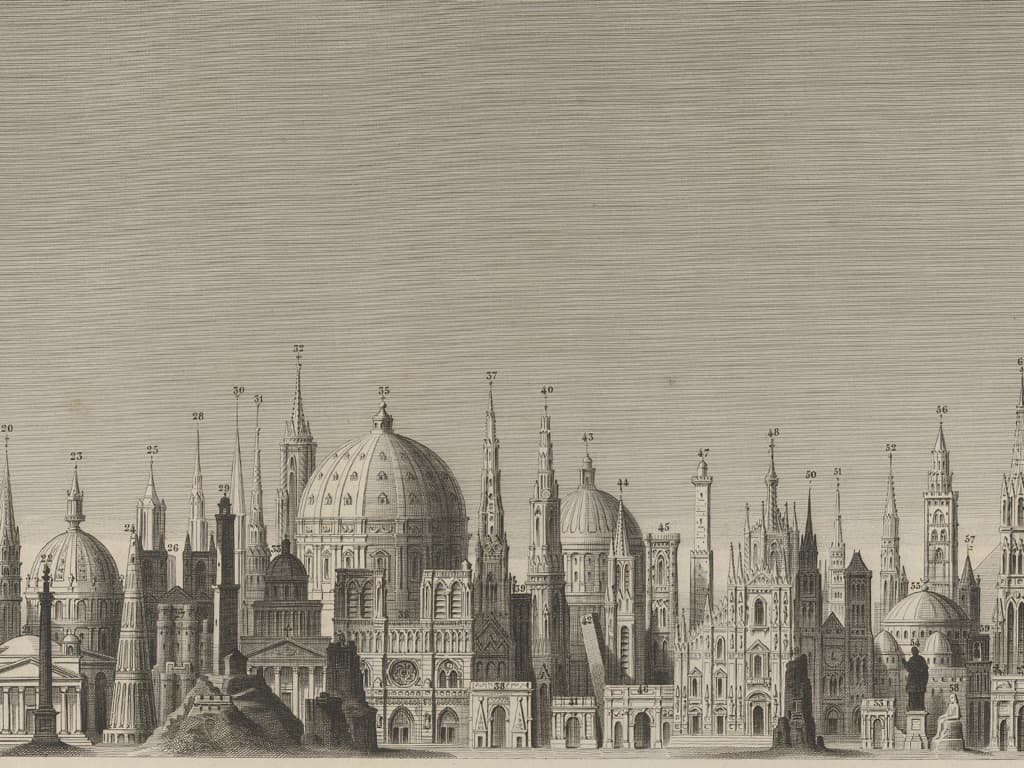
Reality is thus selected and divided up into its fundamental components, in turn measured and organised to facilitate comparison and memorization. The result seems satisfying: the descriptions of the world become more and more detailed and geographical maps become more and more reliable, as can be seen in the three comparative tables of this important 1867 Italian atlas preserved in our Library. But what reality is and what we know about it continuously evolves, as several wrong or outdated details reveal: for example, the highest mountain on earth was once considered the Dhaulagiri, but actually it’s the seventh highest mountain; in the table the length of the Amazon River is less than that of the Mississippi, which was considered at time the longest river on Earth; it is also needless to note that the highest recorded elevation reached by a human being no longer belongs to Carlo Brioschi, who flew in a balloon from Prato Della Valle in Padua in August of 1808, or that the height of the Pyramid of Cheops is insignificant compared to modern skyscrapers, which can be even seven times higher.
An eternally valid objective description, therefore, does not exist in geography. To describe reality in the most effective and exhaustive way, modern geography suggests that each territory is much more than the sum of its measures, and that to be truly understood it must be studied in every aspect that defines its identity, which is inevitably more complex and mutable.
So, leave behind the idea that geography consists of a mnemonic and quantitative study, and proceed to climb towards the last flight of stairs where a different view of the world of geography awaits.